50+ Canadian French Words and Phrases
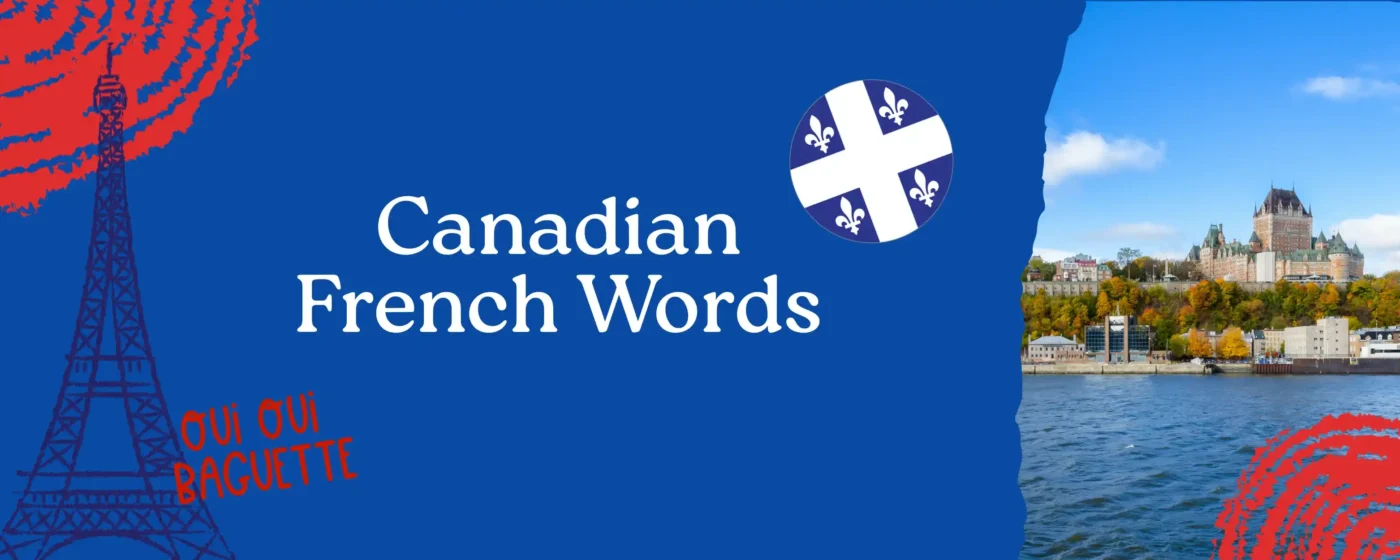
Are you planning a trip to Quebec, or going for study in Quebec, or maybe you’re just a French buff? Then Canadian French is your secret passport! It’s filled with quirky words, catchy phrases, and expressions you won’t find in standard French. These can be your go-to for turning that “bonjour” into a real connection! Mastering these Canadian French words and phrases will not only make your daily chats smoother, and funnier, but also way more authentic. Let’s delve into those Canadian French words and phrases for now. Allez-y!
Key Takeaway
- Canadian French reflects Quebec culture with unique pronunciation, vocabulary, and expressions that help learners connect more naturally with locals.
- Daily life words and phrases in Quebec differ from France French, making real conversations easier when you understand local usage.
- Quebec slang and idioms add color and personality to speech, helping learners sound confident, expressive, and more authentically Québécois.
- Learning Canadian French phrases improves travel, study, and social experiences by making interactions smoother, friendlier, and culturally meaningful.
Canadian French vs France French
Canadian French (often called “Québécois French”) differs from the standard French spoken in France in terms of pronunciation, vocabulary, and everyday usage. These differences reflect Quebec’s history, culture, and the influence of the English colonisers, making it a unique version of the French language.
- One of the most noticeable differences is the pronunciation.In Quebec French, words are often shortened.For example: “p’tit” instead of the France French “petit”.
- The accent itself also tends to be more nasal and melodic compared to standard French.
- Vocabulary is another differentiating factor. Common words often differ in the versions.For example: a ‘car’ is “char” in Quebec, while in France it’s “voiture”. ‘Shopping’ in Quebec is “magasiner”, whereas in France it’s “faire du shopping/ faire les courses”.These differences in day-to-day vocabulary and words highlight how local culture and English borrowings shape Canadian French!
- Verb usage and levels/ tones of formality set the two versions of French language apart!For example: In Quebec, people use “tu” more informally, even in situations where “vous” would be expected in France. This makes interactions feel friendlier but can surprise learners used to standard French etiquette.
- Regional phrases also add flavor to conversations.For example: “c’est le fun” (it’s fun) is natural in Quebec but not at all common in France.
Understanding these nuances is key for effective communication, especially if you’re a traveler or student who wishes to blend in with the local folks!
Daily Life Canadian French Words/Phrases
Here’s a fun collection of Québécois French words you’ll hear in daily life. These will not only enrich your vocabulary as a French learner but will also help you sound more local and confident in conversations.
| Canadian French Word/ Phrase | English Meaning | Example |
|---|---|---|
| Cégep | Post-secondary college in Quebec | Mon frère étudie au cégep à Montréal. (My brother studies at college in Montreal.) |
| Blonde | Girlfriend | Il sort avec sa blonde depuis deux ans.(He’s been dating his girlfriend for two years.) |
| Déjeuner | Breakfast (not lunch) | On va prendre le déjeuner au café. (We’re having breakfast at the café.) |
| Dîner | Lunch (not dinner) | Je t’appelle après le dîner. (I’ll call you after lunch.) |
| Souper | Dinner (evening meal) | On se voit pour le souper chez moi. (Let’s meet for dinner at my place.) |
| Tuque | Winter hat | N’oublie pas ta tuque, il fait froid! (Don’t forget your hat, it’s cold!) |
| Frette | Cold | Ouvre pas la fenêtre, il fait frette. (Don’t open the window, it’s freezing.) |
| Poutine | Fries with cheese curds and gravy | On va manger une poutine après le match. (Let’s eat poutine after the game.) |
| Liqueur | Soft drink | Je prends une liqueur avec mon repas. (I’ll have a soda with my meal.) |
| Breuvage | Beverage | Quel breuvage veux-tu? (Which drink do you want?) |
| Stationnement | Parking lot | Le stationnement est plein. (The parking lot is full.) |
| Jouer dehors | To play outside | Les enfants aiment jouer dehors. (The kids like playing outside.) |
If French pronunciation feels confusing, this detailed guide on 13 hard to pronounce French words will truly make speaking easier.
Quebec Conversational Phrases
Want to learn some conversational phrases in Canadian French to help you better connect and explore there? Worry not, we’ve got you covered! Here’s a list of practical conversational phrases for greetings, asking directions, and small talk, which will result in more natural and friendly interactions during your time in Quebec.
| Canadian French Word/ Phrase | English Meaning | Context |
|---|---|---|
| Allô! | Hi/Hello | Casual greeting among friends or on the phone. |
| Ça va? | How’s it going? | Casual way to ask how someone is doing. |
| Ça va bien. Toi? | I’m good. And you? | Typical reply in friendly conversations. |
| Merci beaucoup! | Thank you very much! | Shows gratitude, always appreciated. |
| Pas de problème! | No problem! | Used when reassuring someone. |
| Excusez! | Excuse me! | To get attention politely in shops or public places. |
| Où est le métro? | Where is the metro? | Useful when asking directions in cities. |
| C’est loin d’ici? | Is it far from here? | Checking distance politely. |
| À gauche ou à droite? | To the left or to the right? | Clarifying directions. |
| Je suis perdu(e). | I’m lost. | Helpful when navigating unfamiliar places. |
| Combien ça coûte? | How much does it cost? | Common in shops or markets. |
| Il fait frette! | It’s freezing! | Casual weather talk, very common in winter. |
| Bon appétit! | Enjoy your meal! | Said before eating. |
| Bonne journée! | Have a good day! | Polite way to say goodbye. |
| À tantôt! | See you later! | Informal farewell, often used with friends. |
Quebec Slang Words and Phrases
Quebec has a rich collection of slang words and phrases that make conversations lively, colorful, and distinct from standard French. These expressions reflect the province’s culture, humor, and unique way of seeing the world. Here are the most common ones:
| Quebec Slang Word/Phrase | English Meaning | Example |
|---|---|---|
| Tiguidou | Great, perfect | Tout est tiguidou! (Everything is perfect!) |
| Être tanné | To be fed up | Je suis tanné d’attendre. (I’m fed up with waiting.) |
| Pogner la crisse | To get very angry | Il a pogné la crisse quand il a vu ça. (He got really angry when he saw that.) |
| Magané | Worn out, damaged | Mes souliers sont maganés. (My shoes are worn out.) |
| Avoir de l’allure | To look good, stylish | Ton manteau a de l’allure! (Your coat looks great!) |
| Capoter | To freak out / be amazed | J’ai capoté quand j’ai vu le prix! (I freaked out when I saw the price!) |
| Dépanneur (dep) | Corner store | Je vais au dépanneur acheter du lait. (I’m going to the corner store to buy milk.) |
| Flatte | Pet (an animal) | Viens flatter le chien. (Come pet the dog.) |
| Piasse | Dollar | Ça coûte 20 piasses. (It costs 20 bucks.) |
| Chum | Boyfriend / buddy | C’est mon chum. (That’s my boyfriend.) |
| Niaiser | To fool around / waste time | Arrête de niaiser! (Stop fooling around!) |
| Pogne | Popular / attractive | Ce chanteur pogne beaucoup. (This singer is really popular.) |
| C’est correct | It’s okay / fine | C’est correct, merci. (It’s fine, thanks.) |
| C’est plate. | That’s boring. | Le film hier soir? C’était plate. (The movie last night? It was boring.) |
| C’est le fun | It’s fun | Merci pour la fête, c’était vraiment le fun.(Thanks for the party, it was really fun.) |
| Envoye! | Come on / hurry up | Envoye, on va être en retard! (Come on, we’ll be late!) |
Stop Guessing, Start Speaking!
With our expert tutors, you’ll master the words you need to speak French confidently!
Quebec Expressions and Idioms
In Quebec French, idioms not only enrich conversation but also open a window into local humor and culture. Idiomatic expressions and phrases are the heart and soul of Canadian French and they reveal how people think, joke, and connect in everyday life. Understanding them will make communication smoother and more fun. Here is a list of some of the most popular Quebec idiomatic expressions:
| Quebec Idiomatic Expression | Literal Translation | Actual Meaning | Example |
|---|---|---|---|
| Être sur son trente-six | To be on one’s thirty-six | To be dressed up | Elle est sur son trente-six pour le mariage. (She’s all dressed up for the wedding.) |
| Avoir la langue bien pendue | To have a well-hung tongue | To be talkative | Mon oncle a la langue bien pendue. (My uncle is very talkative.) |
| Donner sa langue au chat | To give one’s tongue to the cat | To give up / not know | Je ne sais pas, je donne ma langue au chat. (I don’t know, I give up.) |
| Mettre la pédale douce | To put the soft pedal | To slow down / take it easy | Mets la pédale douce, tu travailles trop. (Take it easy, you’re working too much.) |
| Tomber dans les pommes | To fall in the apples | To faint | Elle a tellement eu peur qu’elle est tombée dans les pommes. (She was so scared she fainted.) |
| Casser la baraque | To break the house | To be a huge success | Le groupe a cassé la baraque hier soir! (The band was a huge hit last night!) |
| Tirer le diable par la queue | To pull the devil by the tail | To struggle financially | Ils tirent le diable par la queue ces temps-ci. (They’re struggling to make ends meet these days.) |
| Faire la grasse matinée | To do the fat morning | To sleep in | Dimanche, je fais la grasse matinée. (On Sunday, I sleep in.) |
| Passer la nuit blanche | To spend a white night | To stay up all night | J’ai passé une nuit blanche à étudier. (I stayed up all night studying.) |
| Être au bout du rouleau | To be at the end of the roll | To be exhausted | Après le travail, je suis au bout du rouleau. (After work, I’m exhausted.) |
| Avoir le coup de foudre | To have a lightning strike | To fall in love at first sight | Ils ont eu le coup de foudre à Québec. (They fell in love at first sight in Quebec.) |
| Avoir un chat dans la gorge | To have a cat in the throat | To have a sore throat | J’ai un chat dans la gorge, je ne peux pas chanter. (I’ve got a sore throat, I can’t sing.) |
Learn 30 Funny French words and phrases with examples and meanings in this fun blog. Perfect for language lovers who want to smile while learning!
Canadian French Phrases
Canadian French brings with it everyday phrases that differ slightly from standard French in France. These are practical for restaurants, workplaces, or social gatherings and help you blend in naturally. Want to learn some of them? Let’s dive in:
| Canadian French Phrase | English Meaning | Example |
|---|---|---|
| Bonne soirée! | Have a good evening! | On se voit demain, bonne soirée! (See you tomorrow, have a good evening!) |
| Je t’appelle plus tard. | I’ll call you later. | Je suis occupé, je t’appelle plus tard. (I’m busy, I’ll call you later.) |
| On se rejoint au café. | Let’s meet at the café. | On se rejoint au café vers 15h? (Shall we meet at the café around 3 p.m.?) |
| Tu veux venir avec nous? | Do you want to come with us? | On va au cinéma, tu veux venir avec nous? (We’re going to the movies, want to come with us?) |
| Ça me tente! | I feel like it / I’m interested. | Ça me tente d’aller au parc. (I feel like going to the park.) |
| J’ai besoin d’aide. | I need help. | Excusez-moi, j’ai besoin d’aide avec ça. (Excuse me, I need help with this.) |
| Où est la toilette? | Where is the bathroom? | Excusez, où est la toilette? (Excuse me, where’s the bathroom?) |
| Je suis tanné. | I’m fed up / tired of it. | Je suis tanné de ce projet. (I’m fed up with this project.) |
| Ça coûte combien? | How much does it cost? | Cette chemise, ça coûte combien? (How much is this shirt?) |
| Je prends une poutine. | I’ll have a poutine. | Je prends une poutine, s’il vous plaît. (At a restaurant: I’ll have a poutine, please.) |
| On se reparle demain. | We’ll talk again tomorrow. | Bonne nuit, on se reparle demain. (Good night, we’ll talk again tomorrow.) |
| Fais attention! | Be careful! | Fais attention en traversant la rue. (Be careful crossing the street.) |
| Envoye donc! | Come on! | Envoye donc, on va être en retard. (Come on, we’ll be late.) |
Québécois French isn’t just about grammar – it’s about the words, phrases, and idioms that make them sparkle with character. Using them into your daily conversations and interactions makes you sound fluent, confident, and a little more local! Want to go beyond boring “bonjour” and really talk like a Québécois? Well, La Forêt French Class has the perfect toolkit to help you unlock Canadian French like a local, comprising of both a variety of French language classes as well as their interesting French blogs.
Improve your French fluency by understanding French question words. Ask better questions in French communication with this guide
Did You Know?
- Many Quebecers mix English and French in the same conversation.
- Quebec has its own French dubs for movies, different from France’s versions.
Frequently Asked Questions
Q1. Is Canadian French harder to learn?
Ans: Not necessarily harder – just different! With practice, you’ll be able to adjust easily, just like you did with standard French!
Q2. Is Canadian French taught abroad?
Ans: Rarely. Most French courses focus on France French, though Quebec institutions do teach their version!