50+ Commonly Used French Words and Phrases in English
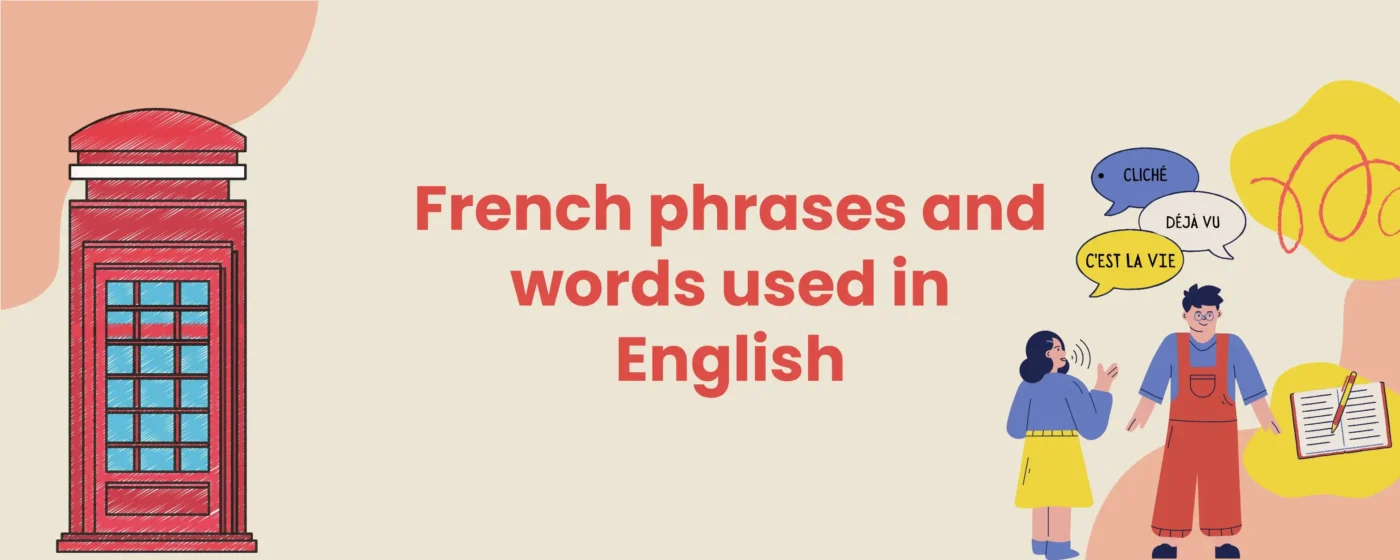
Did you know that French isn’t just a language spoken in France? It is also an official language in 29 countries across multiple continents while being a language deeply woven into everyday English conversation!
From “cul-de-sac” to “rendezvous”, French words and phrases have seamlessly integrated into everyday English, enriching the language with their elegance and nuance. While some words like “fiancé” or “entrepreneur” proudly display their French origins, others such as “menu” or “ballet”, might surprise you with their subtle French roots.
Key Takeaways
- Learn tons of English nouns such as boulevard, cliché, entrepreneur, and fiancé straight-up borrowed from French for streets, business, & romance vibes.
- Here you also learn the adjectives such as chic, faux, nonchalant, and petite add that stylish, effortless flair we love in descriptions.
- You can learn the Place names, words and phrases (cul-de-sac, café, garage) and food terms (baguette, croissant, gourmet) that show French roots in daily life and eating.
- Know the words related to Fashion lingo (beret, couture, haute couture) plus phrases (déjà vu, faux pas, bon appétit) scream elegance and smarts.
- Overall, you can learn about history, prestige, and cultural mash-up, making English way richer with French swagger!
Common English Words With French Origins
French influence on the English language began with the Norman Conquest in 1066, introducing a large number of French words into the English language. Over time, the French continued to influence English through cultural exchange, diplomacy, and the arts, especially during the Renaissance and Enlightenment periods! Come on, let’s explore this multiverse of English with French words etched into history itself!
English Nouns Derived from French
| Nouns derived from French | English Meaning |
|---|---|
| Boulevard | Wide street, often lined with trees |
| Chauffeur | A person whose job is to drive a car for somebody else |
| Cliché | Overused idea/ phrase |
| Décor | Interior design and furnishings |
| Entrepreneur | Person who starts and manages a business |
| Façade | A false appearance that makes someone or something seem better than they really are |
| Fiancé | Engaged person |
| Genre | Category or type |
| Lingerie | Women’s underwear |
| Renaissance | A period of cultural and artistic revival, especially in Europe during the 14th to 17th centuries |
French Adjectives in English
| Adjectives derived from French | English Meaning |
|---|---|
| Bizarre | Strange/ Unusual |
| Chic | Fashionable/ Stylish |
| Debonair | Charming |
| Faux | Imitation |
| Grandiose | Magnificent |
| Mature | Grown |
| Nonchalant | Effortless |
| Petite | Small/ Slender |
| Pompous | Self-important |
| Sincere | Genuine |
English Place Names With French Origins

| Place Names With French Origins | English Meaning |
|---|---|
| Avenue | A broad road in a town or city |
| Café | A small restaurant selling light meals and drinks |
| Chalet | A wooden house or cottage with overhanging eaves (typically found in the Swiss Alps) |
| Cul-de-sac | A street or passage closed at one end |
| Gallery | A room/ building for the display or sale of artworks |
| Garage | A building to store vehicles |
| Lounge | A public room (in a hotel, theater, or club) to sit and relax |
| Mansion | A large, impressive house |
| Terrace | Patio/ Veranda |
| Port | A town/ city with a harbor where ships load & unload |
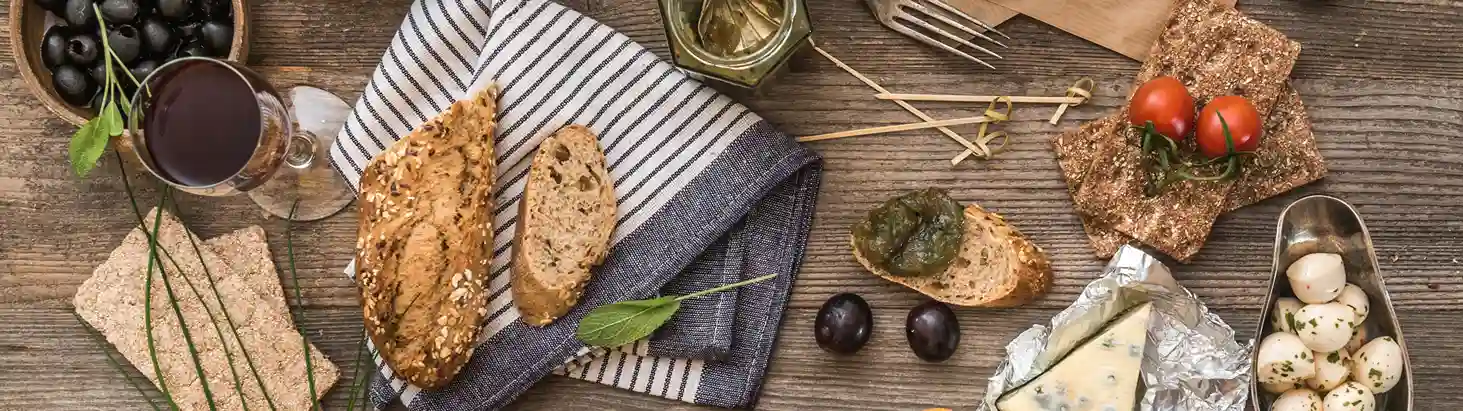
French Food Words
| Nouns derived from French | English Meaning |
|---|---|
| Baguette | A long, thin loaf of French bread |
| Buffet | A meal consisting of several dishes from which guests serve themselves |
| Champagne | A sparkling wine from the Champagne region of France |
| Croissant | A flaky pastry shaped like a crescent |
| Dessert | The sweet course eaten at the end of a meal |
| Filet | A boneless piece of fish |
| Gourmet | A connoisseur of good food |
| Hors d’oeuvre | A small savory dish typically served as an appetizer |
| Omelette | A dish of beaten eggs cooked in a pan |
| Soufflé | A fluffy baked dessert |
French Fashion Words

| Nouns derived from French | English Meaning |
|---|---|
| Beret | A round, flat hat |
| Boutique | A small shop specializing in fashionable clothing or accessories |
| Corset | Undergarment to shape the waist and torso |
| Couture | The design and manufacture of fashionable clothes to a client’s specific requirements |
| Chiffon | A light, sheer fabric typically made from silk or nylon |
| Etiquette | The customary code of polite behavior in society |
| Glamour | Attractiveness associated with fashion |
| Haute couture | Custom-made clothing |
| Mannequin | A model of the human figure used to display clothes in a shop |
| Silhouette | The outline of something |
You can further check out our Explore French Fashion and its Global Influence blog to know more about the interesting world of French fashion!
Vocab Giving You Trouble? Let’s Fix That!
Join our classes and let our teachers guide you to build a vocabulary that sticks!
French Phrases Used in English

| French Phrases used in English | English Meaning |
|---|---|
| À la carte | Ordering individual dishes from a menu |
| Au naturel | In natural state |
| Bon appétit | An expression wishing someone a good meal |
| Déjà vu | The feeling of having already experienced the present situation |
| Double entendre | Statement with 2 meanings |
| En route | On the way |
| Faux pas | A social blunder |
| Joie de vivre | Joy of living |
| Savoir-faire | The ability to act or speak appropriately in social situations |
| Touché | An acknowledgment used during a discussion of a clever point made by someone else |
While many French words have seamlessly blended into the English language, some phrases maintain their French charm. Discover even more everyday expressions in our article on 20 French phrases used in English.
Why French Words and Phrases are Popular in English?
The popularity of French words and phrases in English can be attributed to several factors deeply rooted in cultural exchange, historical influences, and perceived prestige. France has a rich cultural heritage spanning literature, art, cuisine, and philosophy.
As such, French terms often enter English through cultural imports like food (For example, cuisine terms like “à la carte”), fashion terms like “haute couture”, and art terms like “avant-garde”). Furthermore, French is often associated with sophistication, elegance, and refinement, contributing to its adoption in domains like fashion, fine dining, and diplomacy.
Moreover, French has historically been a language of literature and academia. Many literary works, scientific terms, and philosophical concepts originated or were popularized in French, leading to their incorporation into English-speaking intellectual discourse.
Conclusion
The popularity of French words and phrases in English reflects a long-standing cultural exchange, historical intertwining, and the perceived prestige associated with the French language and culture.
This linguistic fusion continues to enrich both languages and underscores the interconnectedness of global cultures. To explore and appreciate the French influence in their daily language, you can highlight common French words and phrases used in the English language without awareness, such as “cul-de-sac” or “faux pas,” illustrating their origin and meaning.
Also, connecting historical events, such as the Norman invasion, to the infusion of French into English, further highlights the deep cultural and linguistic ties between the two languages! Happy learning!
Frequently Asked Questions
Q1. Are there any differences in pronunciation between French words used in English and their original French pronunciation?
Ans: Of course! There are often pronunciation differences between the same word in these 2 languages due to different phonetic rules. For instance, debris (/ˈdeɪbriː/) in English is pronounced differently than in French (/dəbʁi/).
Q2. What does “déjà vu” mean?
Ans: It’s a French phrase meaning “already seen”. It describes the feeling of having experienced something before.
Q3. Is there any difference between the words “chef” and “cook”?
Ans: Yes! A “chef” is a highly skilled and trained cook, often in charge of a kitchen. Whereas, a “cook” is a general term for someone who prepares food.