
Top 10 Cities in France by Population That You Must Know
France, a captivating blend of history and charm, invites you into a world of romance and cultural richness. From the iconic Eiffel Tower to the picturesque vineyards and Alps, it’s a country painted with diverse landscapes.
With museums like the Louvre and the soulful notes of jazz in the air, the French embrace art and culture effortlessly. It’s a place where every moment, from a Seine stroll to a Provence market visit, becomes a story. France isn’t just a destination; it’s an invitation to savor the simple joys with a touch of unmistakable French allure.
Key Takeaways
- Cities across France offer a warm blend of culture, historic charm, and modern living, giving every traveler something meaningful to experience.
- Coastal cities like Marseille and Nice create a relaxed atmosphere with beautiful sea views, lively neighborhoods, and rich local traditions to enjoy.
- Bordeaux attracts visitors with its elegant streets, celebrated vineyards, and strong cultural identity that reflects centuries of French heritage.
- Growing cities such as Lyon and Toulouse provide vibrant student life, innovative industries, and opportunities that highlight France’s evolving urban character.
France Map
Roughly hexagonal in shape, the continental expanse of France shares borders on the northeast with Belgium and Luxembourg, on the east with Germany, Switzerland, and Italy, on the south with the Mediterranean Sea, Spain, and Andorra, on the west with the Bay of Biscay, and on the northwest with the English Channel, also known as La Manche.
The geographical canvas of France is a masterpiece of diverse landscapes. From the sun-drenched vineyards of Bordeaux to the snowy peaks of the French Alps, each region tells a unique story.
France Total Population
As of the latest census, France is home to over 67 million people. This demographic mosaic includes not only native French citizens but also a significant number of immigrants, creating a rich tapestry of languages, traditions, and perspectives.
While major urban cities like Paris, Lyon, and Marseille draw significant populations, there is a notable presence of inhabitants in smaller towns and rural areas. From the bustling streets of Paris to the tranquil villages of Provence, the pulse of the nation is fueled by its people.
France Capital
Paris, often referred to as the “City of Light,” serves as the beating heart of France. Revered for its cultural treasures, Paris is a global center for art, fashion, and gastronomy. It is also the most populated city in France. The Eiffel Tower, the Louvre Museum, and the Notre-Dame Cathedral are iconic landmarks that draw millions of visitors each year.
From the charming streets of Montmartre to the grandeur of the Champs-Élysées, Paris is a city of romance, inspiration, and historical significance.
Transitioning from the overview of France, let’s delve into a closer look at the top 10 largest cities in France, each a unique expression of the nation’s diversity.
Cities in France by Population
1. Paris
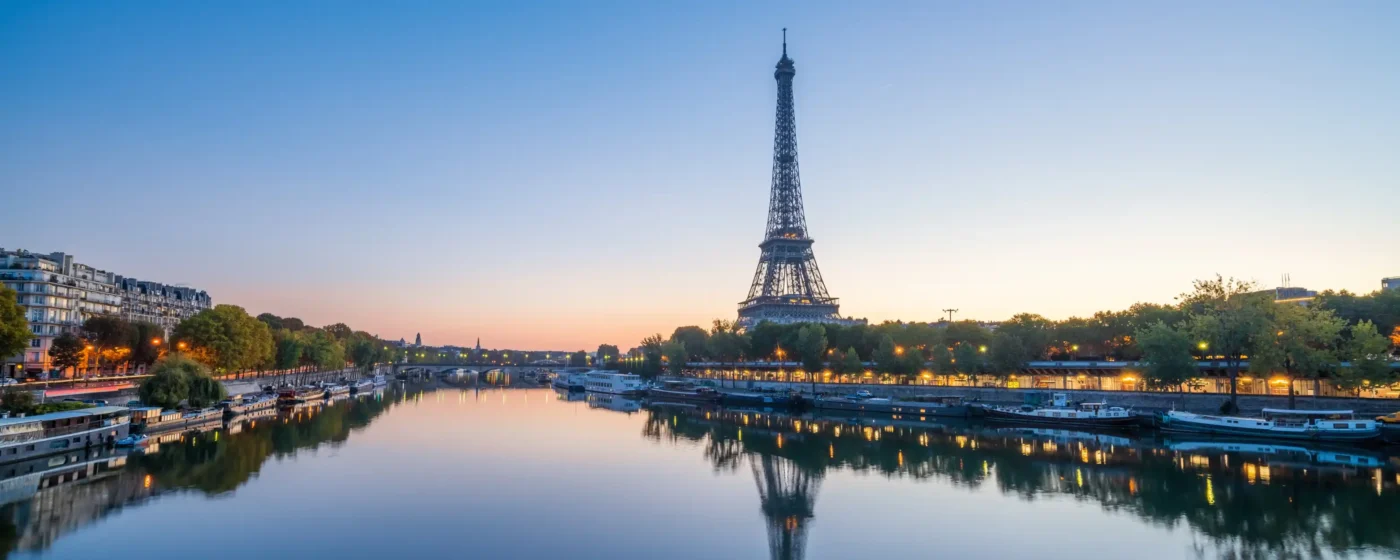
Population: 9,381,921 (2025)
Land Area: 1,381 km²
Undoubtedly, Paris reigns as the largest and most populous city in France. Located in northern France in the Île-de-France region, Paris is the political, economic, and cultural capital of the country. The city attracts millions of tourists every year with famous landmarks like the Eiffel Tower, Louvre Museum, Notre-Dame Cathedral, Champs-Élysées, and Palace of Versailles nearby. This places Paris as a global icon of romance and culture.
Paris is also home to prestigious universities such as Sorbonne University, Sciences Po, and Université PSL, making it a global center for higher education and research. It is one of Europe’s strongest economic hubs and plays a major role in finance, fashion, luxury goods, tourism, media, and technology industries.
Major global companies such as LVMH, Chanel, Renault, and Airbus offices operate from Paris. With a population exceeding 9 million, Paris is a testament to cultural opulence and historical richness.
2. Marseille
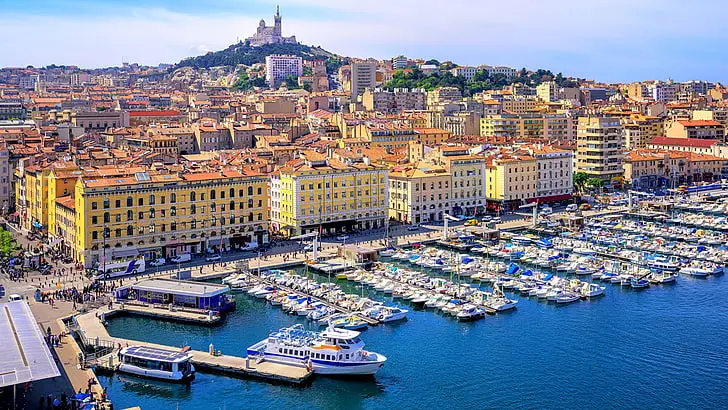
Population: 891,463 (2025)
Land Area: 169 km²
Located in southern France along the Mediterranean coast, Marseille, is France’s largest port city. Marseille beckons with its coastal charm and serves as a melting pot of cultures. The Old Port, Vieux-Port, breathes life into Marseille’s historical narrative, where fishermen’s boats bob alongside stylish yachts.
It plays a major role in shipping, trade, logistics, tourism, and maritime industries. CMA CGM, one of the world’s leading shipping companies, is headquartered here.
Marseille’s major status isn’t just it’s physical dimension; it’s a celebration of the city’s magnetic charm. It is famous for the Old Port, Basilique Notre-Dame de la Garde, Calanques National Park, and Château d’If. It is a cultural crossroads, epitomizing the diversity that defines France.
3. Lyon
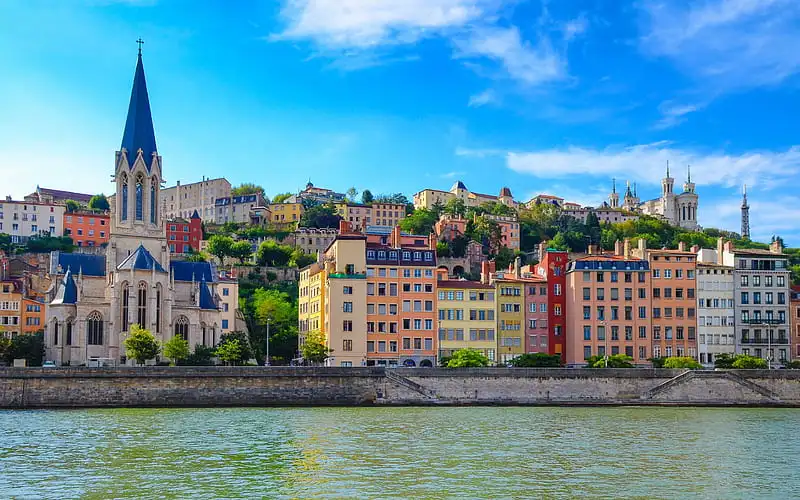
Population: 1,202,985 (2025)
Land Area: 242 km²
Lyon is located in east-central France, nestled along the Rhône and Saône rivers. Lyon unfolds as a culinary haven and UNESCO-listed historical gem. It’s a major city that tantalizes the senses with gastronomic excellence which is why it is known as France’s gastronomic capital. Lyon is the second most populated and showcases the architectural heritage that graces France.
Popular attractions include Vieux Lyon, Basilica of Notre-Dame de Fourvière, Parc de la Tête d’Or, and the famous traboules. Each traboule tells a tale of Lyon’s silk-weaving past, its resistance during World War II, and the city’s commitment to preserving its architectural heritage.
Lyon is also recognized for its excellent universities, including Université Claude Bernard Lyon 1 and EM Lyon Business School. The city has strong industries in biotechnology, pharmaceuticals, software, banking, and manufacturing. Companies like Sanofi, Renault Trucks, and bioMérieux have a strong presence here.
4. Toulouse

Population: 642,224 (2025)
Land Area: 188 km²
Nestled along the banks of the Garonne River, Toulouse, often referred to as La Ville Rose or the “Pink City” due to its terracotta-colored buildings, stands as a captivating major city in southwestern France.
Often called the aerospace capital of Europe, Toulouse has strong industries in aviation, space technology, engineering, and research. Airbus has it’s global headquarters here, along with several aerospace and technology companies.
Toulouse symbolizes France’s forward-thinking spirit and technological prowess. Major attractions include Place du Capitole, Basilica of Saint-Sernin, and Cité de l’Espace. The city is also known for top institutions like the University of Toulouse and ISAE-SUPAERO.
In essence, Toulouse transcends being merely a populous city; it’s a dynamic urban tapestry that weaves together the threads of history, innovation, and a commitment to shaping the future.
Experience France, Learn the Language!
Discover hidden gems with our language and culture insights. Explore with us!
5. Nice
Population: 418,294 (2025)
Land Area: 108 km²
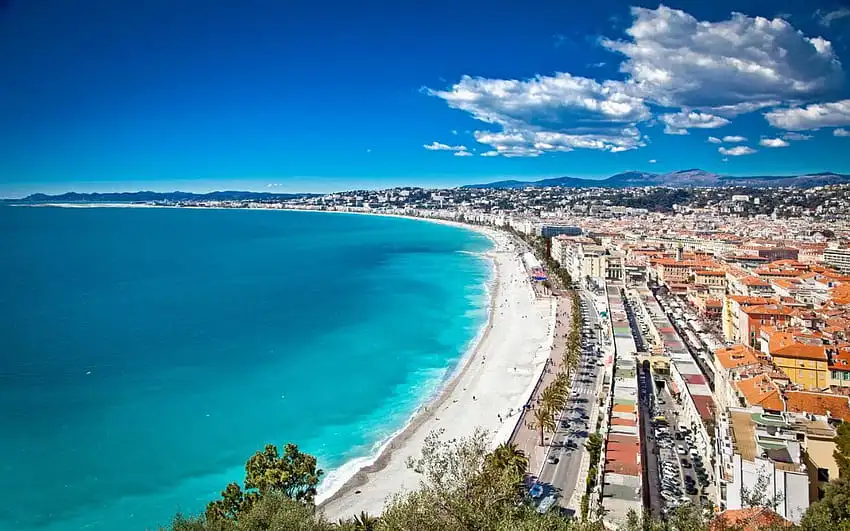
Nice is situated on the French Riviera in southeastern France in the Provence-Alpes-Côte d’Azur region. Tourism is the city’s biggest industry, along with hospitality, luxury services, and real estate. Nice also attracts international business events and conferences.
The Promenade des Anglais, Old Town, Castle Hill, and Mediterranean beaches make Nice one of France’s most visited destinations. Université Côte d’Azur is a major university offering international programs.
The French city Nice is situated on the French Riviera in southeastern France in the Provence-Alpes-Côte d’Azur region. Nice is a captivating embodiment of the French Riviera’s azure allure and cultural richness. Nice becomes a cultural canvas where artists and enthusiasts alike find inspiration against the backdrop of the Mediterranean.
Nice invites residents and visitors to immerse themselves in destinations like The Promenade des Anglais, Old Town, and Castle Hill. Thus, Tourism is the city’s biggest industry, along with hospitality, luxury services, and real estate. Nice also attracts international business events and conferences.
6. Nantes

Population: 453,523 (2025)
Land Area: 121 km²
The seventh largest city in France, Nantes, thrives on the banks of the Loire River, Erdre River, where green spaces like the Parc des Chantiers and the Île de Versailles offer a tranquil escape within the urban landscape.
It is an important economic city with strengths in shipbuilding, digital technology, food processing, and renewable energy. Companies such as Eurofins Scientific and several industrial firms operate in Nantes.
Nantes is not just a city; it’s a dynamic ecosystem where nature, history, and contemporary creativity coexist in harmony. Nantes is also a living museum where Château des Ducs de Bretagne, Machines of the Isle of Nantes, and Jardin des Plantes stands as a testament to the city’s rich history.
7. Strasbourg

Population: 398,175 (2025)
Land Area: 93 km²
Strasbourg, located in northeastern France is the 9th largest city of France by population and also home to the Rhine River. The heart of Strasbourg lies in its Grande Île, a UNESCO-listed island surrounded by the Ill River, where medieval architecture meets the modernity of the European Parliament.
The University of Strasbourg is highly respected for science, medicine, and international research.
The Cathedral of Notre Dame, with its intricate Gothic architecture, stands as an iconic symbol of Strasbourg. Cultural richness permeates Strasbourg, evident in events like the Strasbourg Christmas Market, one of the oldest and most charming in Europe.
8. Bordeaux
Population: 631,551 (2025)
Land Area: 182 km²
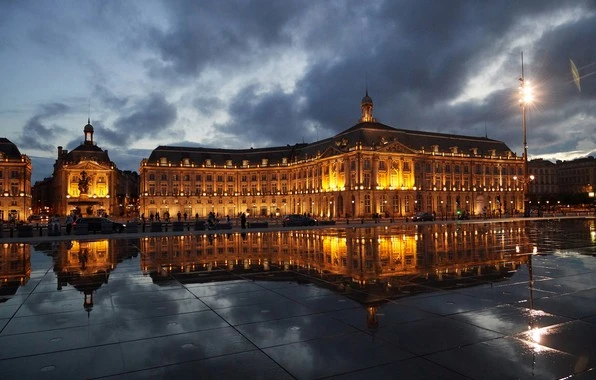
Bordeaux lies in southwestern France in the Nouvelle-Aquitaine region. Bordeaux’s major city identity extends to its world-renowned vineyards, making it a global capital of wine. The city’s wine culture is celebrated in the Cité du Vin, a contemporary museum dedicated to the history and art of winemaking. Wine companies and luxury brands contribute significantly to the local economy.
The Garonne River, flowing through the city, becomes an integral part of it. Bordeaux’s green spaces, like the Jardin Public, offer residents and visitors a tranquil escape within the urban landscape. Visitors can explore attractions like Place de la Bourse, Cité du Vin, and Bordeaux Cathedral. This city’s identity is an ode to it’s vineyards, neoclassical splendor, and a commitment to the art of living well.
9. Lille
Population: 893,282 (2025)
Land Area: 211 km²
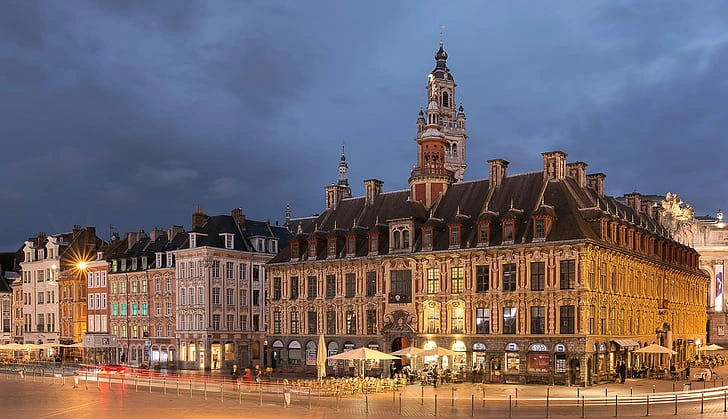
Lille is the third largest city and one of the oldest cities in France. Lille is situated in northern France near the Belgium border in the Hauts-de-France region. It is an important commercial and industrial city with strong sectors in retail, logistics, technology, and manufacturing. Companies such as Decathlon, Auchan, and Bonduelle are headquartered in or around Lille.
Lille University is one of the major educational institutions attracting both French and international students. The Palais Rihour, a Gothic masterpiece, stands as a testament to Lille’s medieval heritage. Lille becomes a city where Gothic and Flemish architectural styles coalesce. It’s a city where Flemish influences blend with French elegance.
10. Grenoble
Population: 544,000 (2025)
Land Area: 18.13 km²
Grenoble is located in southeastern France in the Auvergne-Rhône-Alpes region, surrounded by the French Alps. The city is known for innovation, technology, research, and renewable energy industries. Major companies and research centers linked to electronics and engineering operate here.
Popular attractions include the Bastille Fortress, Grenoble Museum, and alpine landscapes nearby. Grenoble Alpes University is internationally recognized for engineering, science, and technology programs.
Frequently Asked Questions
1. What are the 3 largest cities in France?
Ans: The 3 largest cities in France are Paris,the iconic capital; Marseille, nestled on the Mediterranean coast; and Lyon, situated in east-central France respectively.
2. What are the best cities to live in France?
Ans: The best places to live in France are: Paris for its nightlife, Brittany for its affordability, and Lyon for its food.
3. Which is the most English Friendly city in France?
Ans: Paris is indeed considered a favorable place for English speakers in France due to its cosmopolitan nature and international appeal. From diverse dining options to international communities and services, Paris offers a lifestyle that appeals to those comfortable with English as their primary language.
4. Which is the smallest city in France?
Ans: Castelmoron-d’Albret is the smallest city in France, encompassing a mere 3.5 hectares. It is situated in the Entre Deux Mers wine region. This charming village is located approximately an hour’s drive from Bordeaux.
5. Which is the cheapest city in France?
Ans: Grenoble, located in southeastern France, is considered the cheapest and therefore the most affordable city in France.
6. What is the best city for foreigners in France?
Ans: Lyon, ranking as the third-largest city in France, stands out as a thriving economic center offering abundant job prospects, particularly in sectors like banking, technology, and pharmaceuticals. This attractiveness plays a pivotal role in being the best city in France for foreigners.
Follow La Forêt blog for more interesting topics.